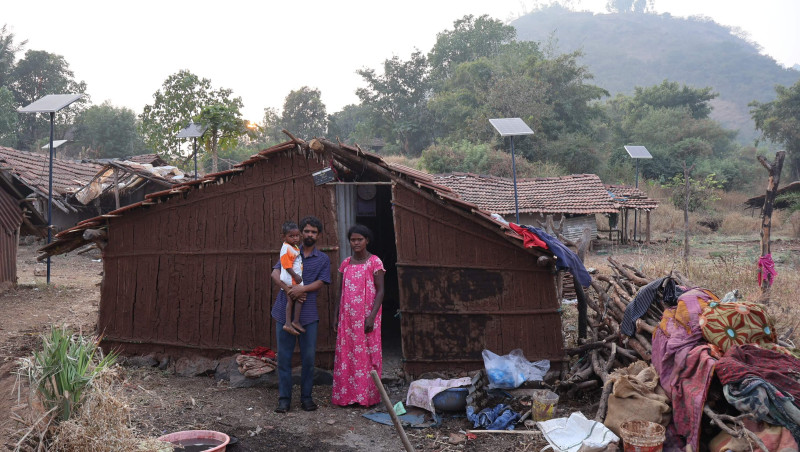

“Mission Urja” Initiative Lighting Up Remote Tribal Hamlets Collective support needed to expand the solar energy-based initiative Although Maharashtra is considered a progressive state, tribal hamlets in the remote regions of the Sahyadri mountains are still far from basic amenities and development. These areas are home to various tribal communities who face serious challenges such as malnutrition, lack of education, inadequate infrastructure (roads, water, electricity), and unemployment. As a result, they remain disconnected from mainstream development. Efforts by government and administrative bodies, along with various social initiatives by NGOs, are helping bring schemes to these tribal hamlets. One such organization is Pune-based Tree-I Foundation, which has been working since 2022 under its “Mission Urja” initiative to illuminate tribal hamlets using solar energy systems with the support of donors. Solar Energy-Based “Mission Urja” Initiative “Mission Urja” operates in the environmentally rich but infrastructure-challenged Sahyadri mountain ranges. These regions are inhabited by Katkari and other marginalized tribal communities, including nomadic and denotified tribes. Many residents live in huts made of wood, sticks, and mud, often without land ownership. Due to the absence of electricity, life comes to a halt after sunset. Darkness restricts movement and poses safety concerns, preventing people from stepping out of their homes. It also affects children’s ability to study at night. To eliminate these limitations, the initiative installs solar-powered streetlights, household solar systems, public lighting arrangements, and solar-powered CCTV systems in these hamlets. Scope of the “Mission Urja” Project
- Villages illuminated: 40 (2022–2026)
- Beneficiary tribal families (home solar systems): 1,400
- Total beneficiaries: 8,400 individuals
- Solar streetlights installed: 695
- Daily solar energy capacity: 6.8 MWh
- Renewable energy generated: 4.7 GWh
- Carbon credits generated: 4,100
- Increased movement and activity in villages after sunset due to solar lighting and CCTV systems
- Reduced dependence on unsafe energy sources
- Improved study conditions for school-going children at night
- Safer roads for daily wage workers
- Stabilized daily life, reducing migration caused by lack of electricity and safety concerns